
A manufacturing company wins a big contract. The monthly production needs increase but the company doesn’t have more space and employees with experience or extra hours during the daytime. While adding a second shift could temporarily aid, it might also create new jobs in the form of supervision, training, or quality-control needs.
This situation highlights a major reason for robots. Robotics isn’t only about replacing human workers with machines. If used properly it can transform the way manufacturers use the production capacity they already have.
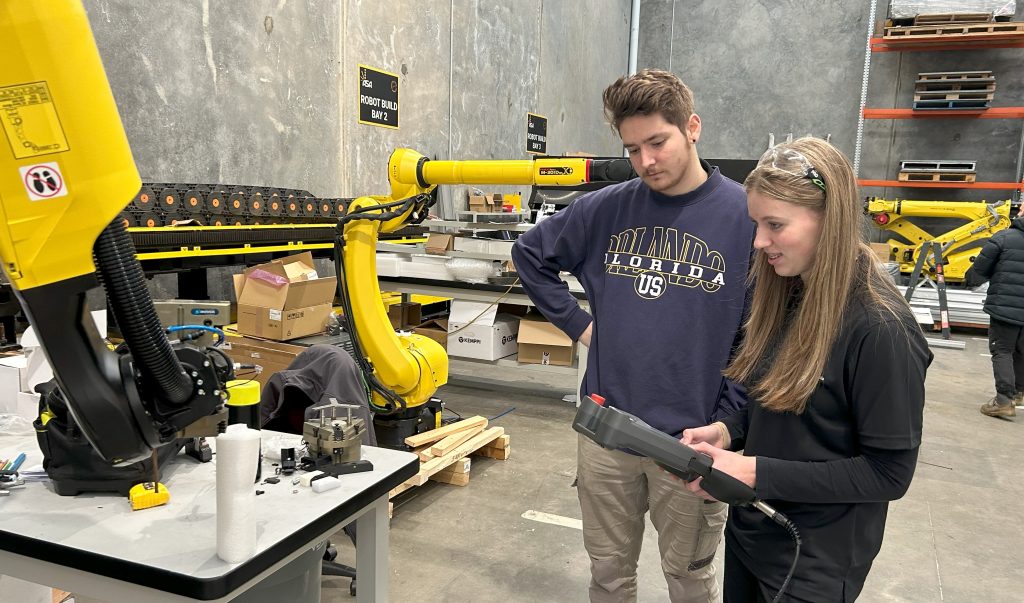
Image credit: automatedsolutions.com.au
Watch the second-to-second time between products
Manufacturing inefficiency doesn’t need to be a major issue. Imagine a worker spending 15 seconds searching for a piece of equipment for 10 seconds, then applying the material, and then a few seconds moving it. The time difference could seem minor even for a single piece of equipment. Those seconds add up when multiplied by thousands.
It’s the same with waste material. A tiny amount of leftover coating or dispensing material that is multiplied throughout a production run that is high-volume could result in a significant expense.
Companies considering robotic automation Australia projects can benefit from examining these small, repeated losses before deciding what equipment they need. The analysis of needs by ASA aims to find bottlenecks and quality issues, waste and other process constraints which could affect an automation project.
A Robot has to fit the Process Itself
A robot’s selection is only one decision in engineering. Controls, guardings and tooling, sensor, conveyors and fixtures are also needed. Engineers must take into consideration the payload and reach while determining how the robot can move around its workspace and interact with everything around it.
ASA offers concept development, system design, CAD simulation and offline programming as part of its plan to FANUC’s robotic automation. The digital simulation allows engineers to explore configurations, estimate cycle time and allow them to test the system prior to making it functional on the floor of the customer’s facility. It’s especially useful when there is a small amount of space or the new robotics is required to be integrated with a production line.
Paint and Dispensing Shows Why Replicability is Critical.
Certain manufacturing processes highlight the importance of controlled movement. Imagine coating hundreds or even thousands of parts. Making components faster is what you want to achieve. It is crucial to manage the speed, distance, and movement of each piece from the beginning until the very end.
ASA has experts working on painting and dispensing solutions across various industries, including automotive and aerospace. In these areas industrial robotic automation could allow for repeatable, programmed movements while also reducing employee exposure to physically demanding or hazardous processes.
Controlled better can reduce excessive material consumption, thereby contributing to a decrease in waste as well as productivity enhancements.
The System Needs People Even After Installation
Automation is not a complete solution to the need for expertise in manufacturing. The knowledge needed to operate, maintain and operate the process shift.
The employees must know how to safely operate equipment be aware of abnormal behavior to identify faults, fix them, and perform appropriate maintenance. The processes and procedures can be adjusted later if the production needs are changed.
ASA provides training on site in safe operation, programming and troubleshooting, as well as electrical and mechanical maintenance. It also offers servicing and ongoing support to check the condition of equipment and to address wear and tear over the course of its operating time.
Capacity refers to more than Being able to work faster
For Australian producers, expanding capacity doesn’t necessarily mean purchasing a larger building or continually increasing the amount of labor required to perform repetitive tasks. The better question to ask is whether the present manufacturing process could be improved.
ASA has been developing and integrating automation solutions in Australia since 2002. We also assist with projects abroad. The method is based on analysis of needs as well as engineering, simulations FANUC robotic integration training, and also servicing.
Automating just for the sake of it isn’t the objective. A system that’s worth its weight in gold must provide measurable benefits to manufacturers, for example more reliable production, better quality methods, less risky processes, and less waste.